Dialect Drift: Tracking Linguistic Innovations Emerging from Cross-Cultural Interactions in Global Online Gaming Lobbies
Written by Dana Jenkins · Nov 6, 2026

Dialect Drift: Tracking Linguistic Innovations Emerging from Cross-Cultural Interactions in Global Online Gaming Lobbies
Global online gaming lobbies have become active sites for language contact, where participants from different linguistic backgrounds exchange terms during matches that last from minutes to hours, and researchers track the resulting hybrid expressions that emerge through repeated exposure across servers. Data from major platforms indicates that voice and text channels facilitate rapid borrowing of vocabulary, with players adapting words from Korean, Portuguese, and Mandarin into English-dominant exchanges while preserving core meanings tied to gameplay actions.
Mechanisms Driving Linguistic Mixing in Matchmaking Systems
Matchmaking algorithms pair individuals across continents based on skill metrics and latency thresholds, which creates environments where speakers of multiple languages must negotiate meaning in real time, and this setup accelerates the formation of shared lexical items that replace longer explanations. Observers note that short commands such as "ping" or "rotate" acquire additional layers when combined with regional modifiers, producing variants that circulate within specific time zones before diffusing to others through recorded replays and community forums.
Studies conducted by university linguistics departments show that cross-cultural exchanges in battle arenas generate new compounds, for instance blending Spanish "no" with English "cap" to signal disbelief in coordinated plays, and these forms stabilize when used consistently by rotating groups of five or more players over successive sessions. The process mirrors historical trade pidgins yet operates at digital speeds, with innovations documented in logs collected between 2024 and 2026.
Documented Innovations and Regional Contributions
Analyses of chat corpora from European and North American servers reveal patterns where Japanese honorific suffixes attach to English strategy terms, yielding expressions that signal respect or urgency during high-stakes moments, while Australian players contribute shortened diminutives that soften commands without altering tactical intent. Researchers at Stanford University examined thousands of hours of voice data and found that such adaptations reduce miscommunication incidents by measurable percentages when teams include at least three distinct native languages.
According to a report published by the Entertainment Software Association, multiplayer titles released after 2023 incorporated more dynamic translation layers that allow players to toggle between literal and contextual renderings, and this feature has supported the spread of hybrid slang rather than suppressing it. In November 2026, updated server metrics from several major publishers showed continued growth in unique lexical entries logged per month, particularly in regions with high immigration of new players from Southeast Asia and Latin America.
Methods for Tracking and Analyzing Drift Patterns
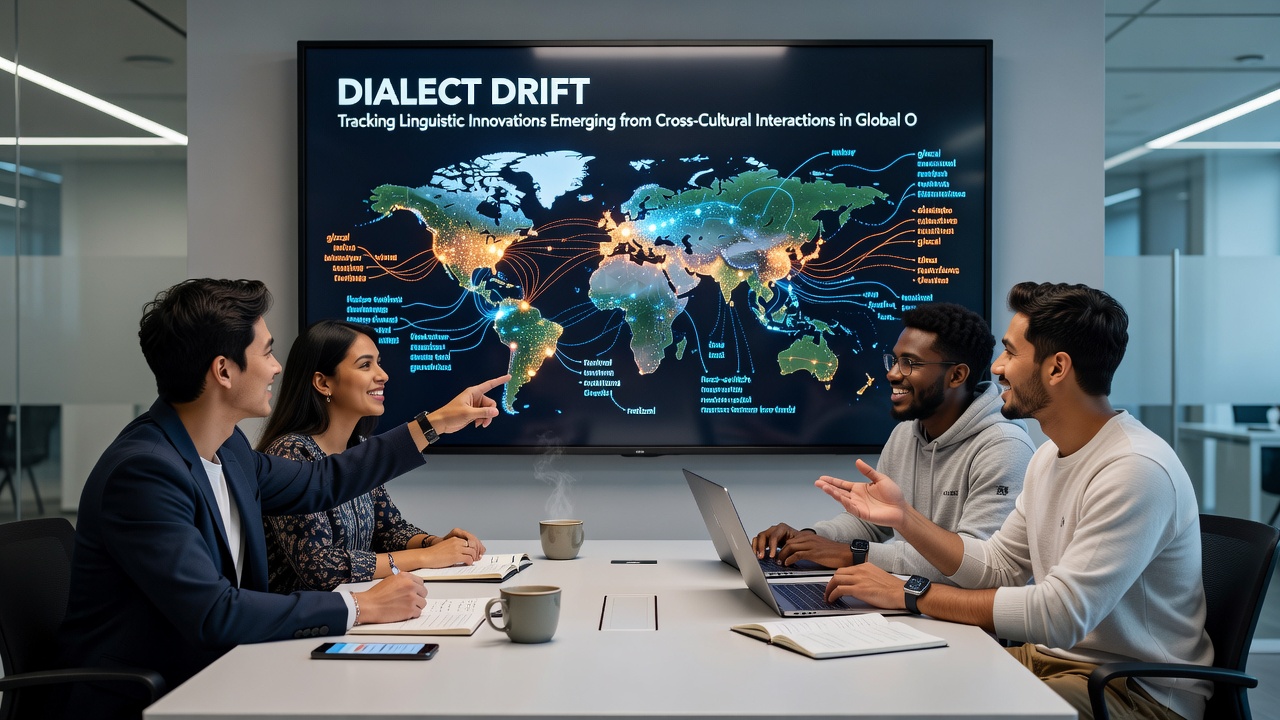
Academic teams employ natural language processing tools trained on gaming-specific datasets to identify neologisms that appear first in mixed-language lobbies and later migrate to single-language channels, and these algorithms flag items that achieve a threshold frequency across unrelated player groups. European research networks, including contributions from the Interactive Software Federation of Europe, have compiled comparative datasets that contrast lobby interactions in 2022 against those recorded through late 2026, revealing accelerated rates of term stabilization when cross-regional events coincide with seasonal content drops.
Player communities themselves contribute through wiki pages and shared glossaries that codify emerging usages, turning transient phrases into reference materials that new participants consult before joining ranked queues. The reality is that such grassroots documentation provides raw material for larger-scale studies, allowing linguists to map diffusion paths from high-density hubs like Seoul servers to secondary nodes in North American time zones.
Broader Implications for Language Contact Studies
Findings from longitudinal observations indicate that gaming-derived innovations occasionally enter mainstream digital communication, appearing in social media threads and streaming commentary where non-gamers adopt the shorthand without direct exposure to the original lobbies. This transfer occurs because repeated exposure within persistent worlds creates strong associative links between the term and its functional role, making the expression portable beyond the game environment.
Observers have recorded cases where hybrid forms originating in temporary alliances during limited-time events persist for months afterward, carried by participants into subsequent titles and thereby linking separate gaming ecosystems through shared vocabulary. Data shows that the rate of such carryover increases when players maintain contact via external platforms, extending the lifespan of lobby-specific coinages.
Conclusion
Tracking dialect drift in global gaming lobbies reveals structured patterns of lexical innovation driven by repeated cross-cultural contact, with empirical records from 2024 through November 2026 confirming steady accumulation of hybrid expressions across major titles. Continued monitoring through automated and community-sourced methods will document how these forms evolve alongside changes in matchmaking technology and regional player demographics, supplying concrete data for language contact research that extends beyond entertainment contexts.