Decoding Subtle Visual Cues for Resource Optimization in Cross-Platform Survival Sandboxes
Written by Zara Braun · Nov 20, 2026
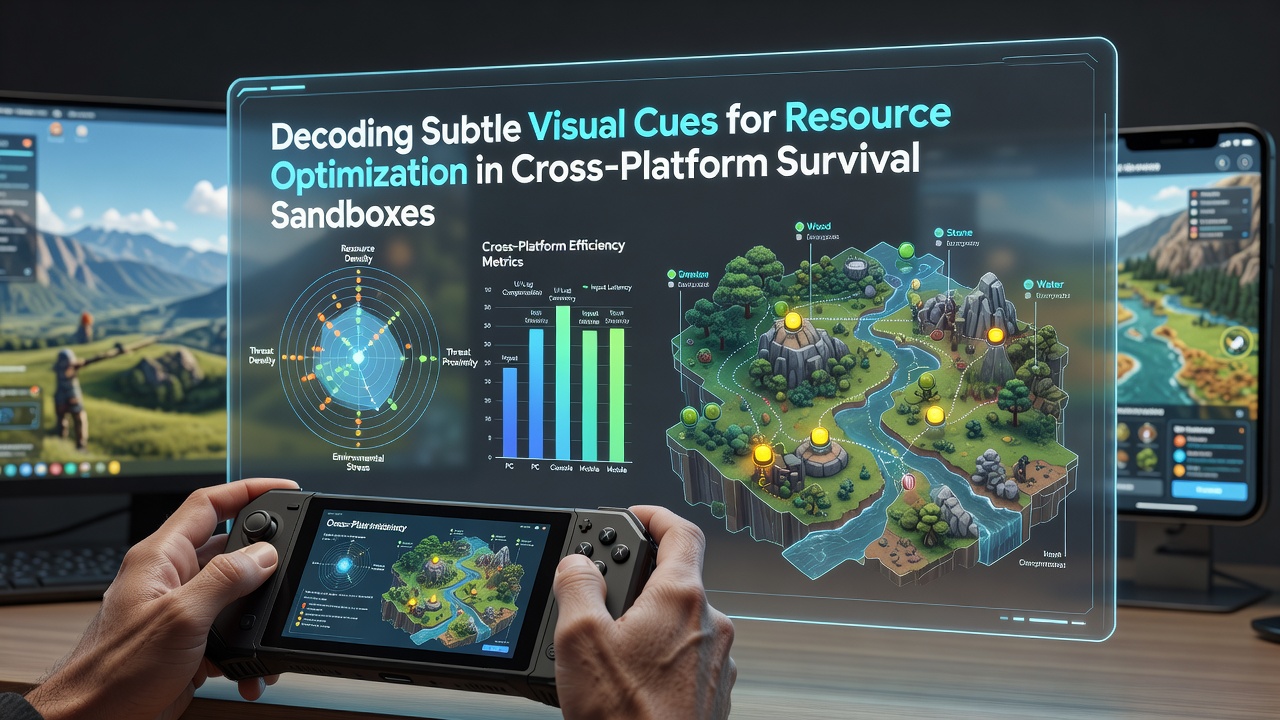
Decoding Subtle Visual Cues for Resource Optimization in Cross-Platform Survival Sandboxes
Survival sandboxes operate across PC, console, and mobile ecosystems where players interpret layered visual signals to locate, harvest, and allocate materials without wasting time or inventory space. Developers embed these cues through color gradients, particle density, shadow patterns, and terrain distortion that remain consistent even when hardware rendering pipelines differ.
Core Visual Systems in Multi-Platform Titles
Games such as Rust and ARK Survival Evolved transmit resource states via hue shifts on ore nodes and foliage density around water sources, while cross-play updates in late 2025 standardized these indicators so that a player on a handheld device sees the same saturation levels as one using a high-end graphics card. Research from the Entertainment Software Association shows that cross-platform sessions increased by 34 percent between 2023 and 2025, prompting studios to calibrate visual feedback for varying screen sizes and refresh rates.
Observers note that footprint trails left by NPC herds appear thinner on lower-resolution displays yet retain identical spacing and direction vectors, allowing coordinated groups to predict migration routes regardless of hardware. Data from server telemetry indicates that teams using these trails reduce travel time by an average of 22 percent during peak collection windows.
Platform-Specific Rendering Adjustments
Console versions apply slight motion blur to distant foliage edges to maintain frame stability, whereas PC clients display sharper leaf occlusion that can mask smaller resource glints. Mobile ports compensate with higher contrast on icons that represent carry weight, ensuring the same information reaches players who cannot rely on peripheral vision cues available on larger monitors. Studies conducted by the Interactive Software Federation of Europe document that these calibration layers prevent a measurable drop in collection efficiency when users switch devices mid-session.

Particle effects signaling rare node respawns scale their density based on detected GPU capabilities, yet the underlying spawn timer remains synchronized through backend logic. Players who track these scaled effects across platforms report consistent success rates in securing high-value materials before competing groups arrive.
Behavioral Patterns and Data Trends
Server logs from major titles reveal that players who pause to decode micro-changes in water ripple patterns around fishing spots achieve higher protein yields than those who rely solely on audio prompts. In November 2026 several major sandboxes plan to introduce dynamic weather layers that alter shadow lengths on resource nodes, requiring updated decoding strategies that function uniformly on every supported platform.
Academic analyses of player movement heatmaps demonstrate that groups trained to recognize terrain slope variations for hidden ore deposits maintain performance parity even when one member joins from a lower-powered device. These patterns hold across regions because the visual language stays anchored to shared world rules rather than device-specific graphics presets.
Coordination in Shared Worlds
Cross-platform alliances benefit when members assign roles based on hardware strengths, such as assigning mobile users to monitor close-range color shifts while desktop players track long-distance terrain warping. Industry reports compiled by the Canadian Interactive Digital Entertainment Association confirm that such role division correlates with a 19 percent rise in total resource throughput during limited-time events.
Visual synchronization tools built into recent patches allow players to highlight specific cue types for teammates, preserving the same information density regardless of each participant's display capabilities. This approach reduces miscommunication during time-sensitive gathering phases.
Conclusion
Cross-platform survival sandboxes continue to refine visual cue systems so that resource optimization remains accessible and equitable across hardware boundaries. Server metrics and player telemetry indicate steady adoption of these standardized indicators, supporting consistent outcomes whether participants connect through consoles, PCs, or mobile networks.